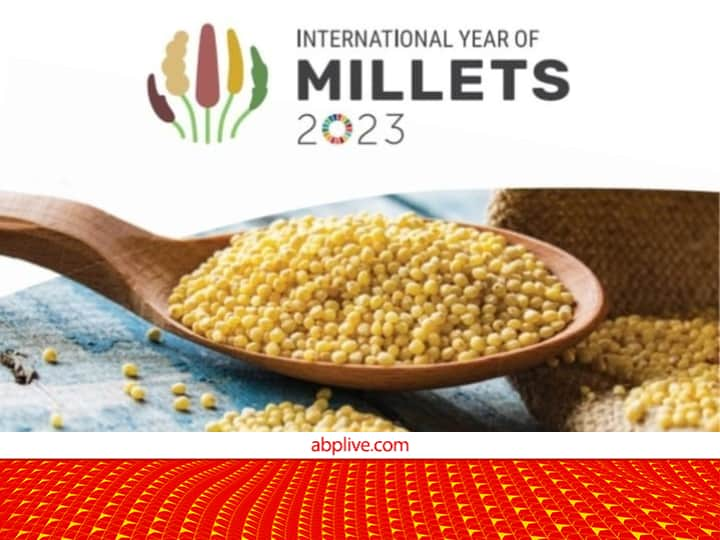
Benefits of Millets: year 2023 is being celebrated as the International Year of Nutritious Cereals. Awareness is being spread among people about coarse grains, so that health can be improved by including it in your diet. It is more convenient to grow and eat coarse grains as compared to wheat and rice. Nutrition is also high in millet, due to which the immunity of the body is strong and it also gets the power to fight against diseases. The central government has launched Shri Anna Yojana to promote millet in its budget.
PM Modi told that in Karnataka, coarse grain is called Siri Dhanya. Respecting the sentiments of the people here, it has been named Shri Anna. Even before this, the mention of Shri Anna is found in our ancient literature.
Shree Anna’s tradition has always been there
India has always been an agricultural country. In the last few years, the trend of eating wheat and rice has increased here, but earlier the country was rich in coarse grains. The people here have already taken the boon of a healthy body by eating coarse grains. Many dishes have been made from this.
This thing is mentioned in all the old documents and literature. It has been told in these that millet was an important part of our diet, cooking, rituals and large level society.
Story found in Abhigyan Shakuntalam
Kalidas has mentioned foxtail millet i.e. Kangni in his Abhijnana Shakutalam. In this work, sage Kanva has been shown putting the cornice in the court of King Dushyant while bidding farewell to Shankutala. Here the auspicious nature is indicated through the cornice.
Mention of millet in Yajurveda
Mention has been found in Yajurveda also about the cultivation of coarse grains and its use. Not only this, Sushruta has divided grains into different classes in his code, in which Dhanya Varga, Khudhanya Varga and Samidhanya Varga etc. In these, many types of coarse grains have been used in the food category.
Message from coarse grains in Kannada as well
Kannada poet Kanakdas has identified ragi as a grain of the weaker section in his work Ramdhanya Charitra. At that time, Ragi made its place among the rest of the grains as a powerful rice and gave the message to the society to become healthy and strong.
Apart from this, Kautilya has also given the method of correct use of coarse grains in his Arthashastra. Kautilya has written that many qualities of millet get absorbed when soaked and boiled. Abul Fazal has also documented millet grains in his work Ain-i-Akbari and different areas suitable for their cultivation in the country.
Read this also:- Huge grant on construction of water tank and purchase of irrigation pipeline, farmers should apply immediately