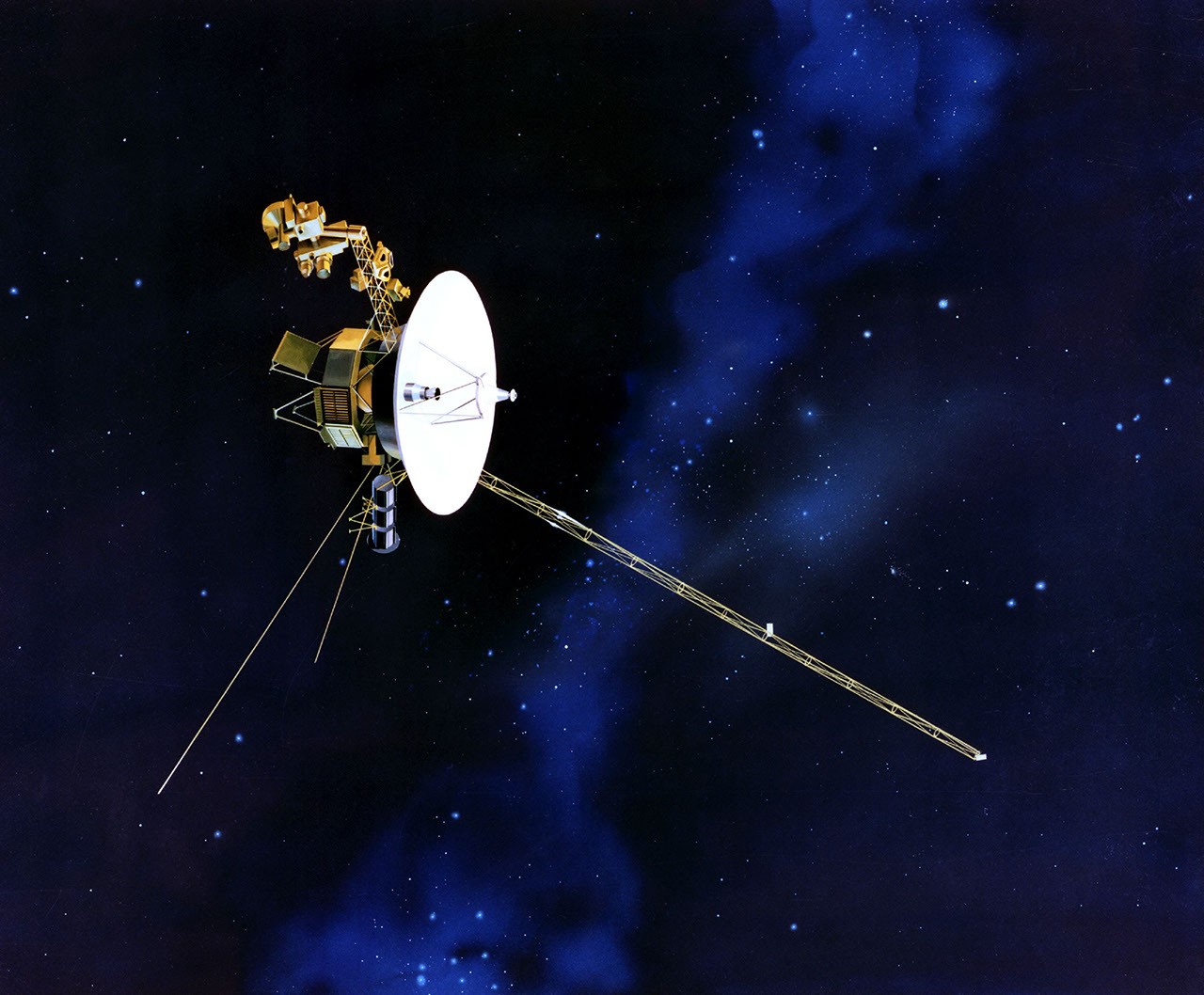
Engineers at NASA’s Jet Propulsion Laboratory have successfully freed up power on Voyager 2, extending how long the spacecraft can continue to do science.
Nicknamed the “Big Bang,” the effort involved simultaneously turning off certain powered devices and substituting them with lower-power alternatives while ensuring the spacecraft remains warm enough to operate.
The Voyagers get their power from radioisotope thermoelectric generators, devices that convert heat from decaying plutonium into electricity. Due to the plutonium supply continually depleting, both probes lose about 4 watts of power each year. After almost a half-century since launch, the spacecraft power margins have grown razor thin, requiring the team to conserve energy by shutting off non-essential devices and systems.
Since 2024, the dwindling power supply has forced the mission to turn off two science instruments on each of the Voyager spacecraft (each spacecraft has 10 instruments; others had been turned off previously because they were only used for the mission’s planetary encounters). Without the Big Bang activity, the mission would have had to turn off another instrument on Voyager 2 before the end of 2026. The savings should provide power to keep its three instruments operating for at least an extra year.
The mission team plans to perform the same swap on Voyager 1, which is farther from Earth than Voyager 2, and to complete the effort in the coming months.
For more information about NASA’s Voyager mission, visit:
https://science.nasa.gov/mission/voyager
Media Contact
Calla Cofield
Jet Propulsion Laboratory, Pasadena, Calif.
626-808-2469
calla.e.cofield@jpl.nasa.gov